
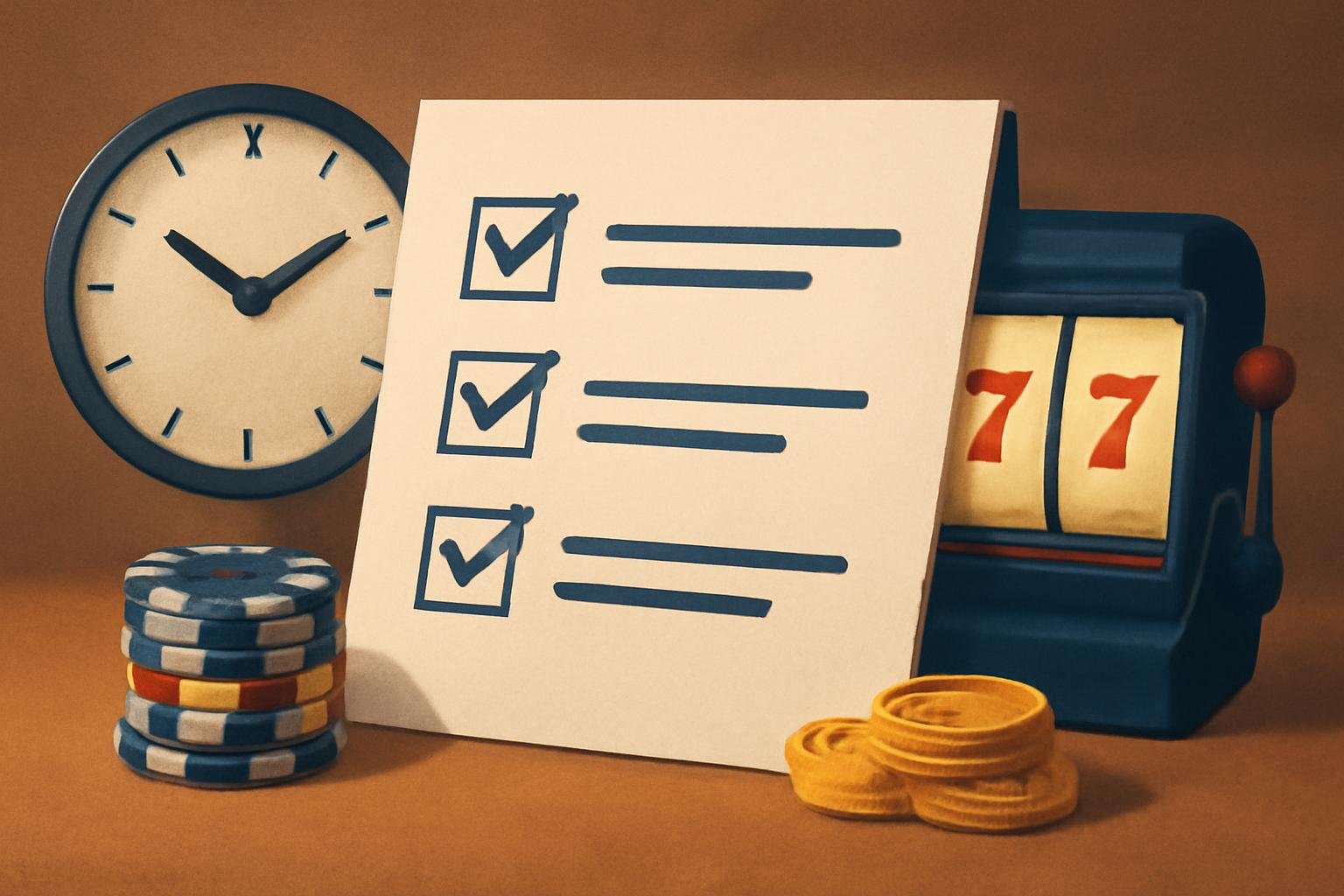
A slot session plan is a set of limits you decide on before opening a game—not a way to predict results or make a session profitable. It can help keep gambling within boundaries by making the spending limit, time limit, and stopping point clear in advance. The key is to choose limits you can afford to lose and to follow them even if a session is going well or badly.
Choose a spending limit you can afford to lose
Decide on a fixed amount for the session using money left over after essentials such as housing, food, bills, savings commitments, and debt payments. Treat the entire amount as entertainment spending that could be lost. Do not use borrowed money, credit intended for necessities, or funds set aside for upcoming expenses.
For example, if you set aside $20 for a session, that is the maximum—not a starting point for deciding whether to add more later. If losing that amount would create stress or affect another expense, choose a lower limit or do not play.
Set a time boundary as well
Money is only one part of a session. Choose an end time before you begin, and consider setting an alarm or using an account’s available time reminders. A timer is a prompt to stop and check your plan, not a reason to extend play because you feel close to a feature or want to recover a loss.
It can help to plan what you will do immediately afterward, such as making dinner or meeting someone. A specific next activity makes the stopping point easier to act on than an open-ended promise to “play for a little while.”
Make the rules simple enough to follow
A useful plan should fit in a few lines. Before starting, write down:
- Maximum spend: the amount you are prepared to lose.
- End time: when the session finishes, regardless of the result.
- No top-ups: whether you will leave the account or payment method alone once play begins.
- Stop conditions: situations that mean you will end the session early, such as feeling upset, distracted, or pressured to win money back.
Decide how you will handle any remaining balance before you start, too. A win does not require another spin, and reaching the spending limit does not justify making an extra deposit. Slot outcomes are uncertain; changing bet size or switching games cannot guarantee a particular result.
Use a short session log
After you stop, note the date, approximate time spent, amount deposited, and amount left or withdrawn. Keep the record factual rather than judging yourself by whether the session ended ahead or behind. The purpose is to see whether your actual play matches the limits you set.
If the log shows repeated extensions, extra deposits, or difficulty stopping, take that seriously. Consider pausing play and using available account limits, time-outs, or self-exclusion tools. For more context on game features that may affect how play feels, see this guide to reading a slot paytable; understanding a game does not remove its uncertainty.
What to do when the plan breaks
If you exceed a limit, do not try to fix the session with another bet. Stop, step away from the game, and avoid making a new deposit while upset. Review what made the limit difficult to keep—perhaps the session was too long, access to payment was too easy, or you were trying to recover losses—and consider adding stronger barriers before any future play.
Repeatedly gambling more than intended, hiding play, or feeling unable to stop can be signs that support may be useful. A general overview of gambling-related difficulties is available in this article on problems and solutions in gambling. You can also look at practical ways to approach gambling more deliberately, while remembering that no set of tips can ensure a win.
A practical takeaway
Write down your spending cap and end time before play, keep the limits fixed, and record what happened afterward. If you cannot stick to the plan, the safest response is to stop and seek support—not to raise the limit. Gambling should never be treated as a way to earn money, and local laws and support services vary by location.


